- info@pacekenya.org
- +254 708 003 481


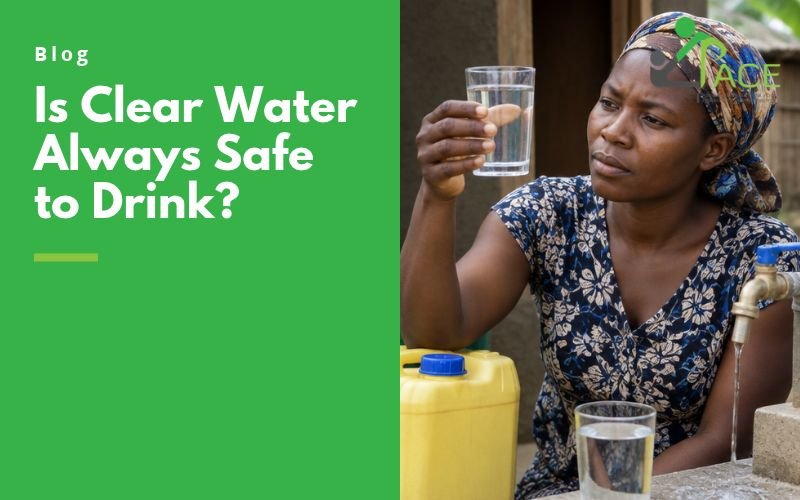
Is clear water safe to drink? This is a common question in Kenyan households. Many people believe that water that looks clear is automatically safe, but this assumption can be dangerous. Visual clarity, meaning water that is clear, colourless, and has no smell, does not guarantee it is free from harmful germs or chemicals. At PACE, through our WASH program, we provide practical knowledge and simple actions to help communities improve hygiene and safe water practices. This article explores why clear water isn't always safe, especially in Kenya's unique environment, and how you can protect your family.
Why Clear Water Can Still Be Dangerous
Our eyes can only detect particles larger than 40 micrometres, but many harmful microbes are much smaller. Bacteria like E. coli measure between 1 to 10 micrometres, and viruses are even tinier, around 20 to 300 nanometres. These invisible pathogens can live in water that looks perfectly clear, making it unsafe despite appearances. In Kenya, waterborne diseases such as cholera, typhoid, and dysentery often come from contaminated water sources that may look clean but carry harmful microorganisms.
Besides biological threats, chemical contaminants also pose serious risks. Some areas in Kenya, notably the Rift Valley regions like Naivasha and Nakuru, have borehole water with fluoride levels exceeding 8.75 mg/L—five times above the World Health Organization's safe limit of 1.5 mg/L. High fluoride causes dental and skeletal fluorosis, especially in children. Furthermore, fast-growing peri-urban areas such as Kitengela and Syokimau report elevated levels of dissolved salts in water, affecting taste and potentially health.
The Myth of Visual Filters: Why Straining Isn't Enough
Many households use cloth to filter water, believing it cleans it. While straining through a clean cloth removes visible dirt and leaves from water, it does not remove microscopic germs or dissolved chemical contaminants. This is because bacteria, viruses, and dissolved substances pass freely through cloth fibers, meaning straining alone does not guarantee safe drinking water.
Understanding the difference between visual cleanliness (Maji Safi) and actual safe water (Maji Salama) is vital. Maji Safi means clear water without visible particles, whereas Maji Salama refers to water tested or treated to remove harmful microbes and chemicals. PACE's WASH education stresses this distinction to help families and communities avoid unsafe water use based only on appearance.
Common Water Sources in Kenya: Hidden Risks Despite Clarity
Clear water from boreholes or municipal taps may hide dangers. Borehole water is vulnerable to naturally occurring minerals and chemicals leaching from underground rock formations. Without proper testing and treatment, it may contain harmful fluoride or nitrates.
Municipal water supplies, though treated, can become contaminated through aging pipes or unclean overhead storage tanks (like Simba or Roto tanks) used widely in Nairobi. These tanks may develop bacterial biofilms if not cleaned regularly, contaminating water despite its clear appearance.
Rainwater harvesting is popular in many Kenyan homes, but it also carries risks. Roof surfaces and open collection drums can introduce dirt, bird droppings, and mosquito breeding, which are health hazards if water is consumed without treatment.
Practical Steps to Make Clear Water Safe at Home
PACE's WASH program advocates simple, effective steps families can follow to ensure drinking water is safe:
Step 1: Physical Clarification
If water is turbid, use a clean, folded cloth to strain it and remove visible dirt before further treatment.
Step 2: Household Disinfection Methods
- Boiling: Bring water to a rolling boil for at least one full minute to kill biological germs. Note that boiling does not remove chemical contaminants.
- Chemical Treatment: Use chlorine-based products like WaterGuard or Aquatabs following recommended dosages. These kill pathogens effectively.
- Solar Disinfection (SODIS): Fill transparent PET bottles with clear water and expose them to direct sunlight for six hours. This low-cost method uses UV rays to disinfect water.
Step 3: Safe Storage
Store treated water in containers with narrow openings and fitted lids or taps to prevent recontamination from hands or dust. Keep storage containers clean and covered.
These practices help households turn visually clean water into truly safe water (maji salama).
The Role of Education and Community Action
Improving water safety requires knowledge and community participation. PACE’s WASH initiative works with schools, households, and local groups to share these practical approaches. By understanding the risks hidden behind clear water and adopting safe water handling and treatment, communities can reduce illness and improve overall well-being.
Encouraging young people and caregivers to spread awareness about Maji Safi vs Maji Salama empowers communities to demand safer water and practice good hygiene. Clean water alone is not enough—it must be safe as well.
How Does Boiling Affect Chemical Contaminants?
While boiling is excellent for killing bacteria, viruses, and parasites, it does not remove chemicals like fluoride, lead, or nitrates. In fact, because pure water evaporates as steam, boiling can slightly increase the concentration of chemicals remaining in the water. Therefore, boiling should be combined with other treatments or water sourced from tested safe supplies when chemical contamination is a concern.
Tracking Water Safety in Kenya: What the Data Shows
According to the Kenya National Bureau of Statistics 2022 Kenya Demographic and Health Survey, 68% of Kenyans have basic access to drinking water, but only about 59% have access to safe drinking water. Over 9.9 million people rely on unimproved or unsafe sources. In rural and peri-urban areas, these figures are even more concerning. The challenge includes the need for water that is not only clean but tested and treated to be safe.
Poverty, infrastructure gaps, and limited awareness contribute to unsafe water use. PACE Kenya’s WASH program is committed to helping households adopt simple, affordable water treatment methods that make a real difference.
Frequently Asked Questions
Can clear water still make you sick?
Yes. Clear water can contain invisible germs like bacteria and viruses, or chemical toxins, that cause illnesses even if the water looks clean.
What is the difference between clean water (maji safi) and safe water (maji salama)?
Maji Safi means water looks clear and free of visible dirt, while Maji Salama means water has been treated and tested to remove harmful microbes and chemicals.
Does boiling water remove fluoride and heavy metals?
Boiling kills germs but does not remove chemicals like fluoride or heavy metals. These may become slightly more concentrated after boiling.
Is straining water through a clean cloth enough to make it safe?
No. Straining removes visible particles but not microscopic pathogens or dissolved chemicals.
How can I treat water safely at home?
You can boil water, use chemical disinfectants like WaterGuard, or apply solar disinfection (SODIS), and always store treated water in clean, covered containers.
Clear water is just the first sign. Safeguarding your family’s health requires treating and storing water properly. Join PACE’s WASH journey for practical, community-focused solutions.
Follow PACE on YouTube, Instagram, TikTok, and Facebook for more tips on hygiene, safe water, and building healthier communities together.



Share This News