- info@pacekenya.org
- +254 708 003 481


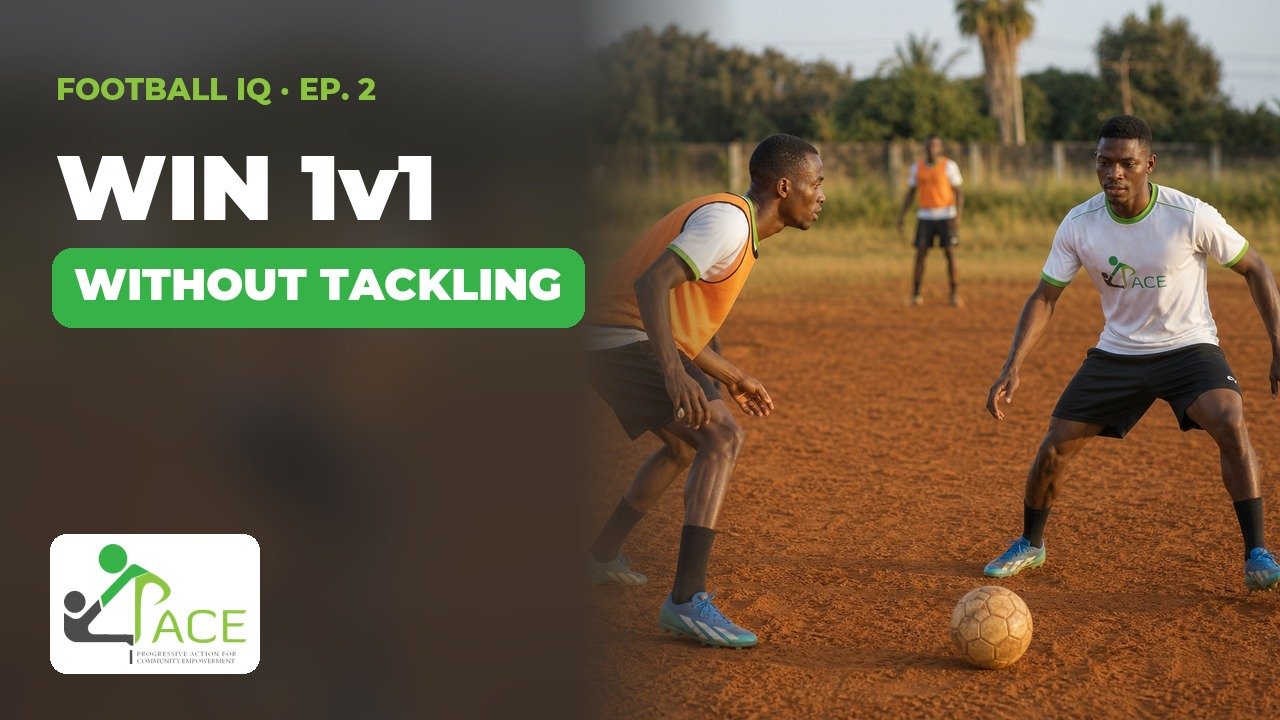
If you've ever been beaten in a one-on-one situation during a football match, you're not alone. Most defenders lose 1v1 duels because they tackle too early and get skipped. The good news? These 1v1 defending tips show you don’t have to dive into tackles to win. By mastering body shape, positioning, and patience, you can become a smart defender who controls the game. Watch the video above to see these principles in action with our PACE squad, then keep reading for step-by-step tips and drills.
On dusty pitches in Nairobi or during a Chapa Dimba qualifier, defenders often rush to tackle. Like Kevin, who lunged too early and allowed Brian to skip past him, many young players make this mistake. Lunging in early invites attackers to dribble around you because you lose your balance and positioning. The goal of 1v1 defense isn’t just to win the ball immediately—it’s to delay the attacker, reduce their options, and force a mistake. By holding your ground patiently, you give your teammates time to recover and support. Winning 1v1 duels is about control, not aggression.
Your stance is the foundation of strong defense. The ideal body shape is side-on, with knees bent and weight on the balls of your feet. Position one foot slightly ahead at about a 45-degree angle, creating a wide, staggered base. This ready position lets you shuffle quickly and stay balanced.
Keep about an arm’s length distance—roughly 1 to 2 yards—from the attacker. Too close and you risk being faked out; too far and you can't react in time. Keep your eyes on the attacker’s hips rather than the ball because the hips give you a better read on their direction and movements. Remember the rule from the episode: guide them, don’t grab them. Kevin demonstrates this well by maintaining side-on stance and responsive shuffles without crossing his feet.
Approach the attacker quickly as the ball comes toward them, then slow down and chop your strides to arrive balanced. Your body should angle so one shoulder points toward the sideline, showing the attacker the outside direction. This forces the attacker toward the edge—the sideline becomes your extra defender.
For example, Achieng successfully pushed a winger to the touchline during a local game, forcing a turnover. On uneven, dusty community pitches, using this natural boundary is a smart way to limit the attacker’s space, reducing chances to cut inside toward goal. Always think of the middle as the danger zone—your job is to push attackers away from it.
Jockeying means staying on your feet, shuffling to match the attacker’s moves without rushing to tackle. Patience is your biggest weapon—you wait for the attacker to make a mistake rather than lunge early.
Good triggers to tackle include: a heavy touch where the ball moves away from the attacker’s foot, the attacker looking down or losing control, or when they take a slower touch after a feint. Until then, keep your cushion and shuffle steadily.
Our PACE tip: "Delay, deny, then win the ball." Watch Kevin wait calmly as Brian attempts a step-over, then swiftly take the ball when Brian’s touch goes heavy.
Partner up with a friend or teammate. One player attacks and tries to dribble, while the defender shadows every movement for 10 seconds. Keep your stance side-on, maintain eye contact with the attacker’s hips, and don’t tackle. This builds reactive footwork, patience, and improves control without risking fouls.
To progress, increase mirroring time, have the attacker use feints and step-overs, and challenge yourself to stay balanced. Try it with a teammate after training and see who stays in front the longest.
Football IQ is life IQ. Just as you read body language on the pitch, learning to guide rather than grasp applies beyond football. In heated conversations or tough situations, patience and calm steering help defuse tension, much like forcing an attacker wide to safety.
At school, work, or home, the best moment to act isn’t always immediately but often after observing and understanding the signs. Our PACE players learn that patience on the pitch builds stronger character off it, reinforcing values of control, respect, and strategic thinking.
Jockeying is a defensive skill where you stay on your feet and shuffle to stay close to the attacker, guiding their movements while avoiding early tackles.
Only when the attacker makes a mistake—like taking a heavy touch, losing control, or looking down—is it the right moment to step in and win the ball.
Typically, defenders angle their body to push attackers toward the sideline or into their weaker foot to reduce scoring chances and use the boundary as an extra defender.
An arm’s length distance (around 1 to 2 yards) balances being close enough to react but far enough to avoid being easily beaten by feints or tricks.
Absolutely. Even on dusty community fields or with heavy boots, solid stance, positioning, and patience help you control attackers effectively without risky tackles.
Try these tips in your next training session or match, and share your progress with us. Remember to subscribe to our YouTube channel for weekly Football IQ lessons and follow PACE on Instagram, TikTok, and Facebook for more football and life skills. Play smart, stay patient, and lead your team to victory both on and off the pitch!



Share This News