- info@pacekenya.org
- 254708003481


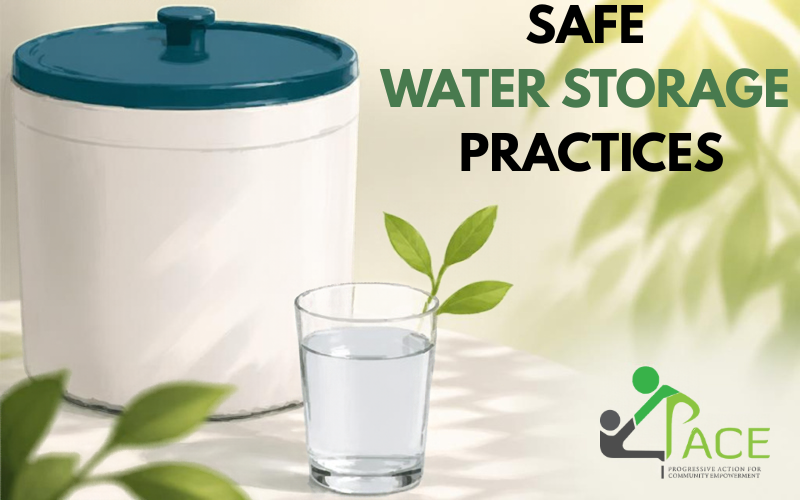
Clean water is essential for life—but keeping it safe after collection is just as important.
Imagine filling a container with clean drinking water. It looks clear. It smells fine. You assume it is safe. At PACE Kenya, we aim at educating the public on safe water storage prctices in an aim to reduce water contamination. This will help reduce spread of waterborne diseases therefore creating a healthy and productive community. However, if the container is dirty, left uncovered, handled with unwashed hands, or stored near contaminants, that clean water can become contaminated before it reaches your glass.
This is why safe water storage at home is an important part of the WASH Program.
Water can become contaminated at several points between its source and consumption. Contamination can happen during collection, transportation, storage, or when water is served.
According to the latest WHO/UNICEF Joint Monitoring Programme estimates, 2.1 billion people globally lacked safely managed drinking water services in 2024. Of these, 106 million people were still drinking directly from surface water sources. Contaminated drinking water can transmit diseases including diarrhoea, cholera, dysentery, typhoid and polio, and estimates that microbiologically contaminated drinking water causes approximately 505,000 Diarrhoea deaths each year. These figures remind us that water safety is not only about having access to water. We must also protect the water we have.
Choose a container that is suitable for storing drinking water. Food-grade plastic, stainless steel, ceramic, or other appropriate water-storage containers can be used. Households should not use containers that previously held fuel, pesticides, chemicals, detergents and other hazardous substances. Chemical residues may remain even after the container has been washed.
Store drinking water in a container with a clean, tight-fitting lid. Covering water safeguards it from insects, dust, dirt, animal contact and other contaminants.
Your hands can carry microorganisms and dirt. Avoid reaching directly into a storage container to collect water. Instead, consider using clean ladle, container with a trap and clean pouring container. The goal is Keeping the hands and potentially contaminated objects away from the water.
Handwashing is one of the simplest ways to protect drinking water. Wash your hands with soap and safe water before opening a water container, pouring drinking water, Handling a clean cup, Cleaning the storage container and Preparing food or drinks. Good WASH practices should not be treated as separate activities.
Do not wait until your container develops an unpleasant smell or visible dirt. Clean it regularly using appropriate cleaning methods while paying particular attention to the lid, inside of the container, opening, the tap and handles. After cleaning, rinse the container properly before refilling it.
Before adding fresh water, try to use up the remaining stored water. Do not simply keep topping up the same container indefinitely. Regular cleaning helps prevent dirt and contamination from accumulating inside the container.
Where you store your water matters. Keep drinking-water containers away from Toilets and latrine Waste bins, Drainage channels, Chemicals, Pesticides, Fuel, Animals and Dirty surfaces. Keep containers in a clean, dry and protected location.
If you are uncertain about the safety of your water, use an appropriate household water-treatment method. Depending on the circumstances, treatment options may include: Boiling, Filtration, Chlorination and Other approved treatment methods. Always follow the instructions provided for the specific treatment method or product. Clear water is not necessarily safe water.
Children are important partners in keeping the home healthy. It is important to teach children:
Not to put their hands into drinking water
Not to put toys or dirty objects into water containers
To use clean cups
To wash their hands before handling drinking water
To keep water containers covered
Good habits learned early can become lifelong habits.
Every household should occasionally review how water is collected, transported, stored and served.
Ask yourself:
Is our water container clean?
Is it properly covered?
Are we using clean hands and utensils?
Is our water stored away from contaminants?
Do we clean the container before refilling it?
Do we treat water when necessary?
If the answer to any of these questions is "no," there is an opportunity to improve.
Poor WASH conditions also contribute significantly to preventable illness and death. WHO estimates that inadequate water, sanitation and hygiene contribute to approximately 1.4 million preventable deaths each year.
This is why safe water storage should not be considered a minor household chore.
It is a health-protection practice.
Water shortages can make safe storage even more important.
When water is unavailable for long periods, households may store larger quantities for later use.
During these periods:
Clean storage containers before filling them.
Keep containers tightly covered.
Store them in a clean location.
Avoid unnecessary opening of containers.
Use clean utensils or taps to dispense water.
Keep drinking water separate from water intended for cleaning or other household activities.
Follow local public-health advice if there is a suspected contamination event.
The longer water is stored, the more important good hygiene and safe handling become.
Before you drink your stored water, remember:
Use a clean, suitable container.
Keep the container covered.
Keep water away from dirt, chemicals, animals and waste.
Wash your hands before handling drinking water.
Use a clean tap, ladle or other appropriate method.
Treat water when its safety is uncertain.
Clean the container regularly before refilling.
There is no single storage period that applies to every situation because safety depends on the quality of the water, the container, storage conditions and handling practices.
The safest approach is to store water in a clean, covered container and handle it hygienically, following local public-health guidance where available.
Yes.
Some microorganisms and chemical contaminants cannot be detected by looking at, smelling or tasting the water.
That is why water safety cannot be judged by appearance alone.
No.
Hands can introduce contaminants into stored water. Use a clean dispensing method instead.
Yes.
A properly covered container helps protect stored water from dust, insects, dirt and other sources of contamination.
No.
Do not use containers that previously contained pesticides, fuel, detergents or other chemicals for drinking water.
Yes.
Regular cleaning helps maintain good water quality and reduces the opportunity for contamination to accumulate.
Boiling can be an effective way to make microbiologically contaminated water safer, but the water must subsequently be stored and handled safely. Otherwise, it can become contaminated again.
Always follow appropriate public-health guidance for your situation.
WASH stands for Water, Sanitation and Hygiene.
Water safety does not end at the water source. Safe collection, transportation, storage, handling and consumption all contribute to protecting health.
Having access to water is important.
But having water is not the same as having safe water.
From the moment water enters your home, everyone has a role to play in protecting it.
A clean container.
A tight-fitting cover.
Clean hands.
Safe dispensing.
Regular cleaning.
These simple actions can help protect your household from water contamination.
The latest global data show that the world has made progress, but 2.1 billion people still lacked safely managed drinking water in 2024.
While governments, organizations and communities continue working to improve access to safe water, every household can also take practical steps to protect the water it already has.
What does your household do to keep drinking water safe?
Share this article with your family, friends, school, community group or WASH network and help spread practical water-safety knowledge.
One clean container. One covered storage vessel. One good hygiene habit at a time—we can build healthier communities.
Take action today: Clean it. Cover it. Protect it. Use it safely.

Share This News